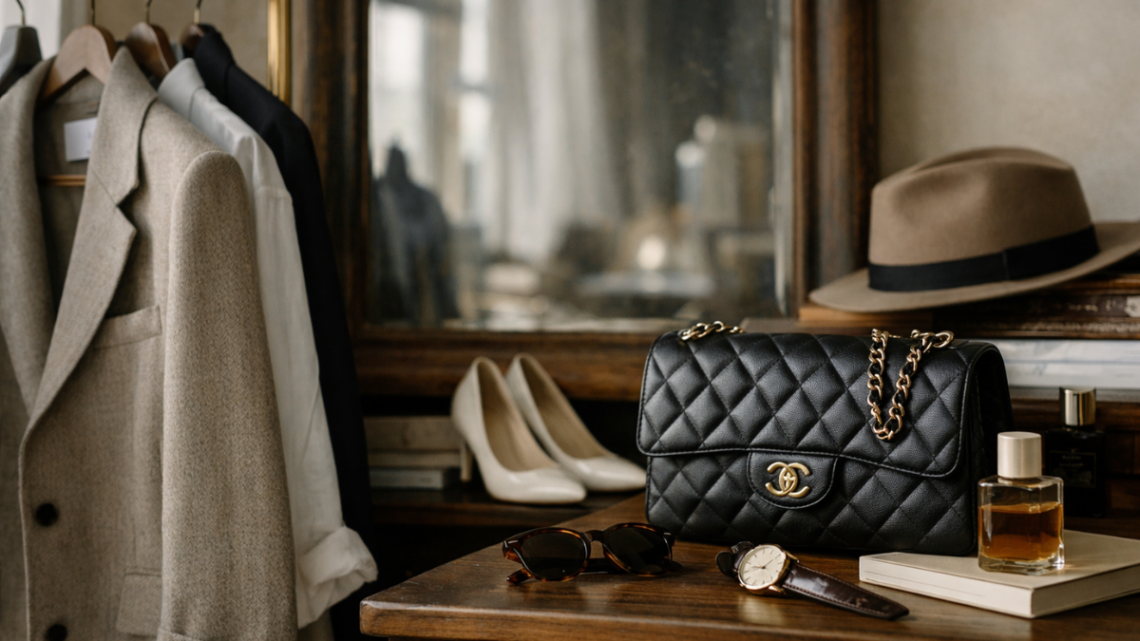
Style vs. Trend: What Truly Lasts
Not long ago, I stood in front of a closet that technically had everything—yet somehow said nothing. You probably know the feeling. Too many pieces. Too many colors. Too many this-used-to-be-on-trend moments. And somewhere in between, the quiet question: Why does all of this suddenly feel so interchangeable?
Maybe it’s because fashion trends now have a lifespan of just 12 to 18 months. By the time you commit, you’re already late. Trends rush. Style stays.
But what really separates the two? And why is it worth giving your style more space than the next hype wave?
Trends Are Loud. Style Is Quiet.
A trend is easy to define. It’s a collective movement. A color, a cut, a detail that suddenly appears everywhere—on runways, in feeds, in shop windows.
Trends aren’t inherently bad. They’re playful. Experimental. Sometimes even liberating. But they always come with an expiration date.
Typical characteristics of trends:
- short-lived and seasonal
- designed for the masses
- visually striking, often shallow
- constantly replaced by the next big thing
What’s celebrated today feels tired tomorrow. Neon colors, micro bags, extreme silhouettes—everything has been here before. And everything has passed.
Style, on the other hand, isn’t a product of momentum. It’s a standpoint.
Style Is Identity, Not a Snapshot
Style doesn’t happen overnight. It evolves. Through experience, change, and clarity. Style is the sum of what truly suits you—not an algorithm.
Personal style:
- is timeless rather than trendy
- individual instead of interchangeable
- understated instead of loud
- adaptable, but never arbitrary
Think of people like Audrey Hepburn or Coco Chanel. Their style was never noisy. But it was unmistakable. Recognizable. Independent of decades or fashion cycles.
That’s the point: recognition over repetition.
Why Trends Are So Tempting
Trends tap into something deeply human: the desire to belong. To participate. To be part of the moment.
Social media has perfected this dynamic. Every week brings a new “must-have.” Every season promises the same thing: This will finally make it right.
The problem? That feeling rarely lasts longer than a few weeks.
Trends can be fun. But they don’t offer direction.
Style Creates Grounding—Inside and Out
Style is nonverbal communication. Before you say a word, your outfit already tells a story. About priorities. About confidence. About you.
A clear sense of style:
- builds confidence
- saves time and mental energy
- feels intentional, never forced
- aligns with who you are
Psychologists call it enclothed cognition—the idea that what you wear influences how you think, move, and act. Clothing shapes perception, including your own.
Style vs. Trend: An Honest Comparison
| Trend | Style | |
|---|---|---|
| Longevity | short-term | long-term |
| Origin | external | internal |
| Effect | attention | presence |
| Cost | often high | sustainable over time |
| Feeling | exciting | aligned |
How to Find Your Style (Without Reinventing Yourself)
1. Don’t Start Shopping—Start Thinking
Before looking for something new, ask yourself:
- When do I feel genuinely well dressed?
- Which pieces do I reach for again and again?
- What stays in my closet untouched—and why?
Style begins with honesty.
2. Collect Inspiration, Not Copies
Mood boards help—but not to recreate looks. Use them to identify patterns: colors, textures, moods.
A quiet tip: include architecture, art, and interiors. Style is never just about clothes.
3. Quality Always Wins Over Quantity
One well-cut coat will outlast five mediocre ones. A refined basic replaces multiple trend-driven purchases.
Pay attention to:
- materials
- fit
- craftsmanship
Everything else is noise.
4. Create Repetition
When colors, silhouettes, or accessories start repeating naturally, you’re on the right path. Style thrives on consistency—not constant novelty.
Why Style Is the Most Sustainable Choice
The fashion industry accounts for roughly 10% of global CO₂ emissions. Style is a subtle but powerful response.
Buying less, choosing carefully, and wearing longer isn’t just more responsible—it’s more elegant.
And honestly: a full closet without direction is far more exhausting than a curated one with intention.
Final Thoughts
Trends come. Trends go. Style remains—if you let it.
Style doesn’t mean restriction. It means selection. Clarity. Confidence. And the freedom to opt out.
Next time you stand in front of your closet, don’t ask: Is this on trend?
Ask instead: Does this feel like me?
Because in the end, nothing wears better than a style that comes from within. And that’s the one thing you can’t buy.


You May Also Like
Quiet luxury explained—attitude rather than trend
Cristina García Atelier—Maximalist minimalism with a vision for the future
