
Taberna Convento—The Heart of a Village, retold
There are places that are more than just four walls and a bar. Places where life comes together. Voices, smells, memories. The Taberna Convento in El Viso del Alcor in Sevilla is just such a place. A center in the best sense of the word. A meeting place, a transit point, an observation post. This is where paths cross: women on their way to mass, children with dusty knees and a ball under their arms, and couples taking slow strolls through warm summer nights. Lemon ice cream, orange blossoms, a quick stop at the bar. Everything fits in here. Really everything.
What makes this tavern so special is not its size or age, but its naturalness. Children still run in, stand on tiptoe to reach the bar, and ask for a glass of water after school. A small, almost inconspicuous ritual. And unfortunately one that has long since disappeared in many places.
An order with history
For architect Alejandro Cateto, this project was more than just another job. It was a homecoming.
“When I got this commission it was very exciting for me, to refurbish the village bar, in the center square, where I had grown up. And I don’t call it that because this is a small town and it’s the only bar in town. In
Alejandro Cateto
fact, if there is one thing in this town, it is bars, but this one is special, it is the most central bar of the town and with the greatest tradition, in front of the Convent, a place that is the protagonist of Holy Week
and where all the processions take place.”
The location is no coincidence. Opposite the convent, in the center of the village, where all life comes together at special moments. This significance should not be modernized or reshaped. It should remain tangible.
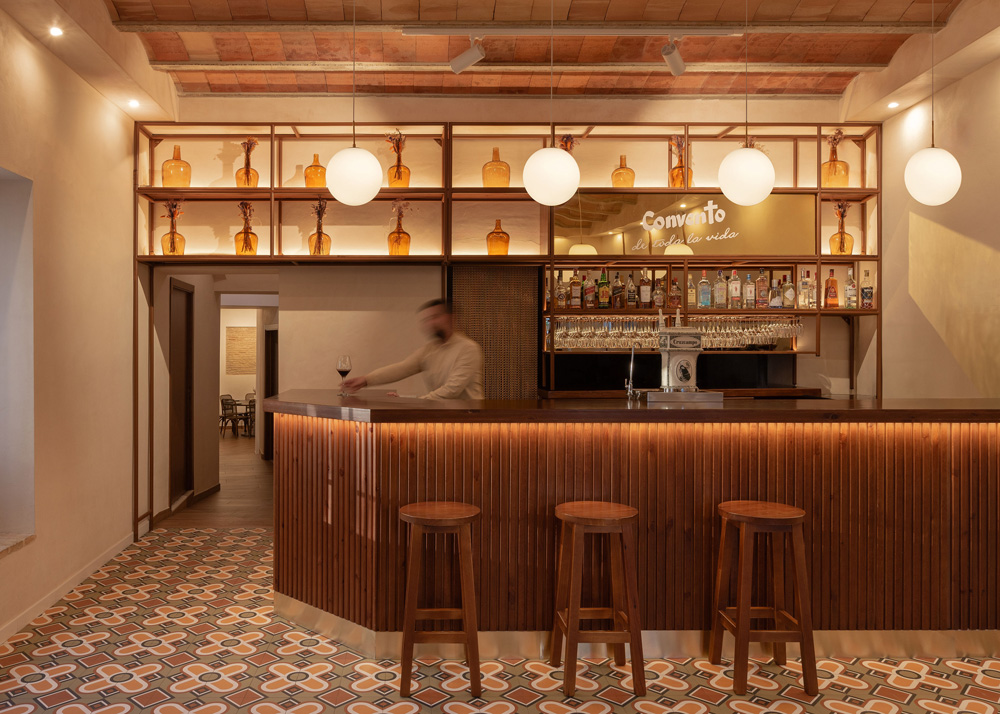
A traditional tavern
The design approach was clear and challenging at the same time: preserve rather than disguise. No folkloric backdrop, no nostalgic sugar coating. Instead, an honest return to what defines classic Sevillian taverns.
- A solid wooden counter that may be used
- Lime mortar on the walls, raw and breathable
- Hydraulic tiles, with patina and character
- Classic glass demijohns, placed almost casually
Materials that are allowed to age. And should age. Because that is precisely where their beauty lies.
Colors with meaning
The color scheme remains earthy. Warm. Approachable. Tones reminiscent of dust, sun, and stone. They anchor the space in the village, in everyday life, in real life.
These are complemented by deliberate purple accents. This is no coincidence. They quietly bridge the gap to the religious tradition of the place and the brotherhood of the neighboring convent. The colors speak, but they do not scream.
Order in the grown
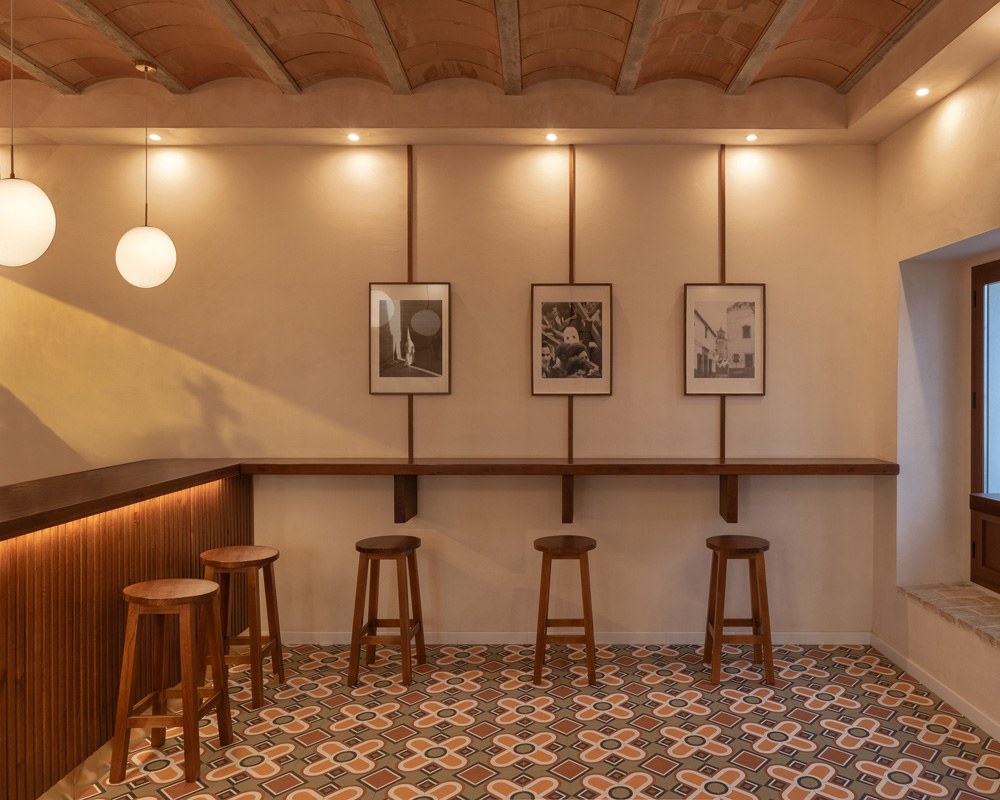
Typical of many old taverns in Seville: walls covered with pictures, souvenirs, and religious motifs. Often disordered, wild, almost chaotic. That was precisely what the old Taberna Convento was like.
This element was deliberately taken up—and reinterpreted. The motifs remained, but their presentation became calmer, more structured, and more contemporary. No loss of soul, but a gain in clarity. Tradition that is allowed to breathe.
The Light of Silence
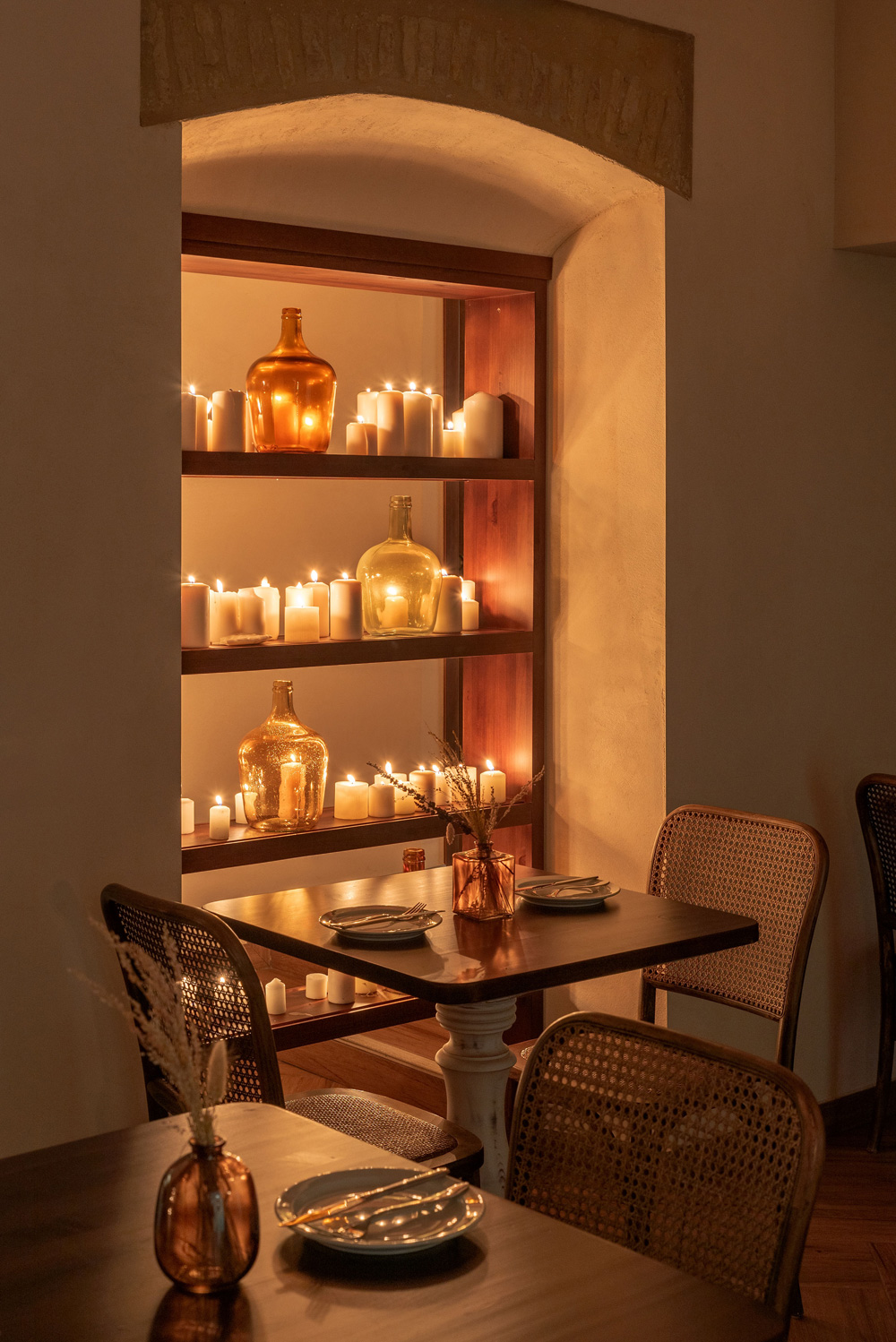
Candles run like a common thread through the rooms. They connect the individual zones, create transitions, and slow down the gaze. Their light is reminiscent of sacred spaces, of pauses, of moments of reflection.
This creates an atmosphere that has become rare: calm, collected, and natural. A place that does not rush. That remains.
Why this place touches the heart
The Taberna Convento is not a design object. It is living proof that good interior design does not have to be loud. That sustainability can also be considered from a cultural perspective. And that the most valuable places are often those that do not need to be reinvented but only respectfully reimagined.
A village. A bar. And the feeling that everything has its place right here. No one else believes you.

